Will T20 Cricket Replace Test Cricket? Here Is What the Future Really Looks Like
Every few months the debate resurfaces at chai stalls, on cricket forums, and in commentary boxes around the world. T20 leagues are getting bigger, richer, and more popular every year. Test cricket is expensive to host, slower to watch, and increasingly squeezed out of an overcrowded international calendar. So the question feels urgent — will T20 cricket eventually replace Test cricket entirely?
The honest answer is more nuanced than either side of the argument usually admits. What is actually happening is not a replacement. It is a restructuring of how cricket exists across the world, with both formats finding their own space — but not without genuine tension between them.
What Test Cricket Actually Represents
Test cricket is the oldest and most demanding form of the game. Matches unfold across five days, with players required to sustain skill, concentration, and physical performance across conditions that change dramatically from session to session. A pitch that offers little to bowlers on day one can become a minefield of uneven bounce and spin by day four. A batter who survived ten overs in the morning session faces an entirely different challenge in the final session under fading light.
For players and serious fans, this is precisely what makes Test cricket irreplaceable. The format tests everything a cricketer has — technical ability, mental endurance, tactical intelligence, and character under sustained pressure. It is the format in which reputations are built or destroyed across years, not hours. The legends of cricket — Bradman, Sobers, Tendulkar, Lara — are measured primarily by their Test records, and that measuring standard has not shifted despite decades of shorter format cricket existing alongside it.
Test cricket also produces a type of match narrative that no shorter format can replicate. A Test match can swing between teams four or five times across five days. A side can be 100 for 5 on day two and win the match on day five. Those stories of recovery, resilience, and reversal are genuinely impossible to generate in twenty overs.
How T20 Changed Everything
T20 cricket arrived in England in 2003 as a deliberately commercial product — designed to be fast, entertaining, and finished in an evening. It worked beyond anyone's initial expectations.
The format spread globally at extraordinary speed. The Indian Premier League launched in 2008 and within a few years became the richest and most watched cricket competition on the planet. The Big Bash League in Australia, the Caribbean Premier League, the Pakistan Super League, and dozens of other franchise tournaments followed. Each one brought substantial broadcast revenue, massive sponsorship deals, and new audiences to cricket in markets that had previously shown limited interest in the sport.
The financial numbers are stark. The IPL alone generates billions of dollars annually from broadcasting rights and sponsorship. Top players earn more from a single IPL season than most cricketers of previous generations earned across entire careers. For players from smaller cricketing nations who do not have the same central contract security as English, Australian, or Indian players, T20 leagues provide financial stability that Test cricket simply cannot match.
This financial reality has directly influenced player behaviour. Several high-profile cricketers have retired from Test cricket or reduced their Test commitments specifically to remain available for T20 leagues. That trend is not slowing down — it is accelerating as more leagues launch and contract values continue to rise.
The Real Tension Between Formats
The central tension is not really about which format fans prefer. Most cricket fans genuinely enjoy both. The real tension is about time, money, and which format national cricket boards and the ICC prioritise when those three things are limited.
The international cricket calendar is already overcrowded. Bilateral Test series, ODI series, T20 internationals, the World Test Championship cycle, the ICC tournament schedule, and the expanding window of franchise T20 leagues all compete for the same playing days. Players physically cannot participate in everything, and the most financially valuable commitments increasingly win that competition.
For smaller Test-playing nations the economics are especially difficult. Hosting a five-day Test match requires significant investment in preparation, staffing, and facilities. Broadcast rights for Test cricket in smaller markets generate a fraction of what T20 events produce. Some nations find themselves in the position of wanting to play Test cricket for its prestige and developmental value but struggling to justify the cost against the financial returns.
The ICC has acknowledged this reality. Comments from ICC leadership have indicated that the total number of men's Tests played annually may decrease, particularly for smaller nations, as the global calendar becomes more constrained. That is a significant admission from the sport's governing body.
What the World Test Championship Has Done
The most meaningful structural response to Test cricket's commercial challenges has been the World Test Championship, introduced by the ICC to give bilateral Test series context beyond the series themselves.
Before the WTC, individual Test series existed in relative isolation. Results mattered to the teams involved and their supporters but had no connection to broader competition. The WTC changed that by creating a two-year championship cycle where every Test match contributes points toward a final between the top two teams. Suddenly every series has stakes beyond local pride — points that affect a team's position in a global competition that culminates in a prestigious final.
The impact on fan engagement has been measurable. Test matches that might previously have been seen as routine bilateral fixtures now carry championship significance that keeps both casual and dedicated fans more engaged across the full match. The WTC final itself has become a genuine event in the cricket calendar, generating substantial interest and broadcast attention.
The ICC has announced plans to expand the World Test Championship to a twelve-team structure from 2027, a move designed specifically to protect Test cricket's competitive relevance and prevent the format from fragmenting into a small group of elite nations playing each other repeatedly while others fall away.
How T20 Has Actually Made Test Cricket Better
One of the more interesting and underappreciated aspects of T20 cricket's rise is the way it has genuinely improved Test cricket as a spectacle.
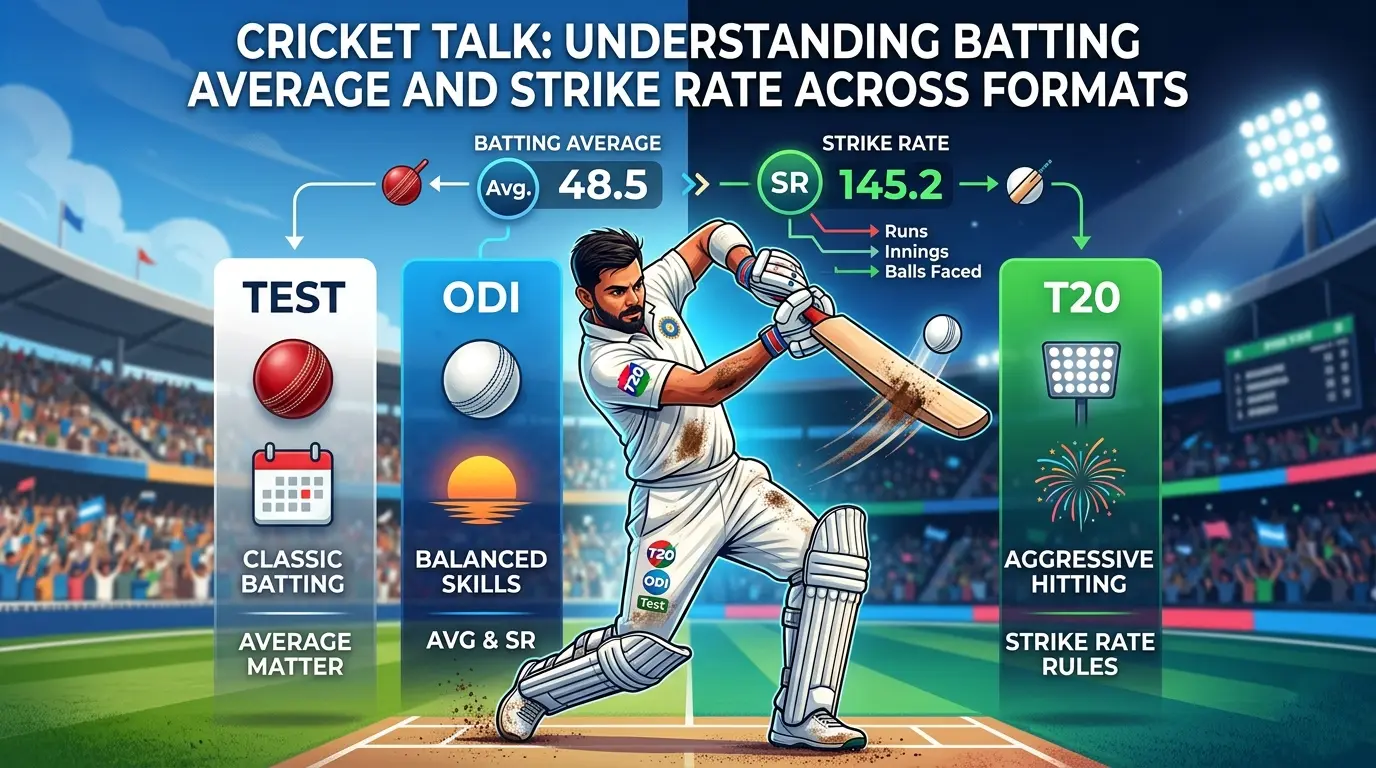
The aggressive batting philosophy T20 demands has filtered directly into how batters approach Test innings. Scoring rates in Test cricket are higher now than at any previous point in the format's history. Declarations come earlier. Run chases that would have been considered impossible a generation ago are now attempted and completed regularly. Test cricket in 2025 is a faster, more result-oriented, and frankly more entertaining version of the format than it was in 1995.
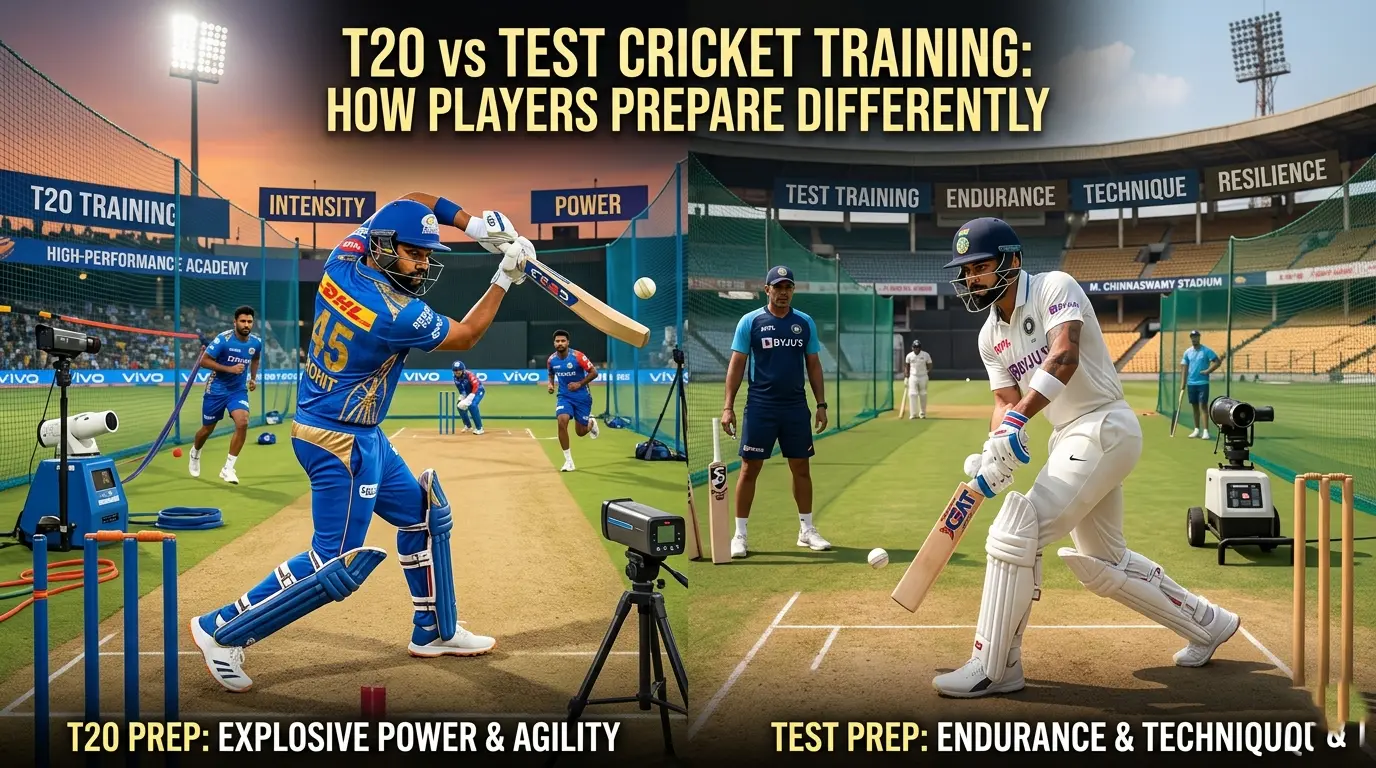
Players are also fitter and more athletic across all formats than previous generations, partly because T20 cricket demands physical standards that have raised the baseline expectation for professional cricketers generally. Fielding in Test cricket is sharper than it has ever been. Player fitness management has become more sophisticated. The athleticism visible in modern Test cricket is a direct downstream benefit of T20's influence.
Where Both Formats Are Actually Headed
The future of cricket is not T20 replacing Test cricket. The evidence for that conclusion is not strong. Test cricket has survived the introduction of limited overs cricket in the 1960s, the growth of ODI cricket in the 1970s and 1980s, and the T20 explosion of the 2000s and 2010s. Each time a shorter format emerged, commentators predicted Test cricket's decline. Each time, the format adapted and survived.
What is genuinely changing is the structure around both formats. Test cricket will likely be played by fewer nations at full bilateral level as the format concentrates among the strongest Test-playing countries. The WTC provides the structural framework to make that concentration feel meaningful rather than exclusive. Smaller nations may play Test cricket less frequently but more purposefully, with each match carrying genuine championship context.
T20 cricket will continue growing commercially, expanding into new markets, and generating the financial resources that fund cricket broadly — including the domestic cricket structures that produce Test players. The two formats are not competing for the same audience or the same purpose. They serve genuinely different functions in cricket's ecosystem, and the sport is healthier when both functions are protected rather than when one is sacrificed for the other.
The street food and the thali meal can both exist. They always have. The challenge for cricket's administrators is making sure the economics and the calendar support both — and that challenge is real, urgent, and not yet fully solved.
FAQ: Will T20 Cricket Replace Test Cricket
Will T20 cricket replace Test cricket in the future? Most cricket experts and analysts believe T20 will not replace Test cricket. The two formats serve different purposes, attract different types of engagement, and the ICC has taken active steps through the World Test Championship to protect Test cricket's long-term relevance.
Why is Test cricket under pressure from T20 leagues? T20 leagues generate far more revenue than Test cricket, and the financial incentives for players to prioritise franchise cricket over Test commitments are growing. The international calendar is also increasingly crowded, making it harder to schedule adequate Test cricket.
What is the World Test Championship and why does it matter? The World Test Championship is an ICC competition where Test series across a two-year cycle contribute points toward a final between the top two teams. It gives individual Test matches championship context and has measurably increased fan engagement with the format.
Has T20 cricket affected how Test cricket is played? Yes significantly. The aggressive batting philosophy of T20 has raised scoring rates in Test cricket, encouraged more attacking declarations, and produced a faster and more result-oriented version of the format than existed before T20 cricket became dominant.
Which format is more popular globally T20 or Test cricket? T20 cricket attracts larger global audiences and generates substantially more revenue. Test cricket commands deeper engagement from its dedicated fanbase and remains the format by which players' careers and legacies are primarily judged within the cricket community.