The Question Every Cricket Fan is Thinking About
You have probably had this argument at some point, maybe with your dad who refuses to miss a single day of a Test match, or with your friend who only tunes in for IPL. Is T20 slowly killing Test cricket? Or are we all getting a little too dramatic?
Honestly, the answer sits somewhere in the middle. And the way you see it probably depends on which kind of cricket fan you are.
Two Formats, Two Completely Different Feelings
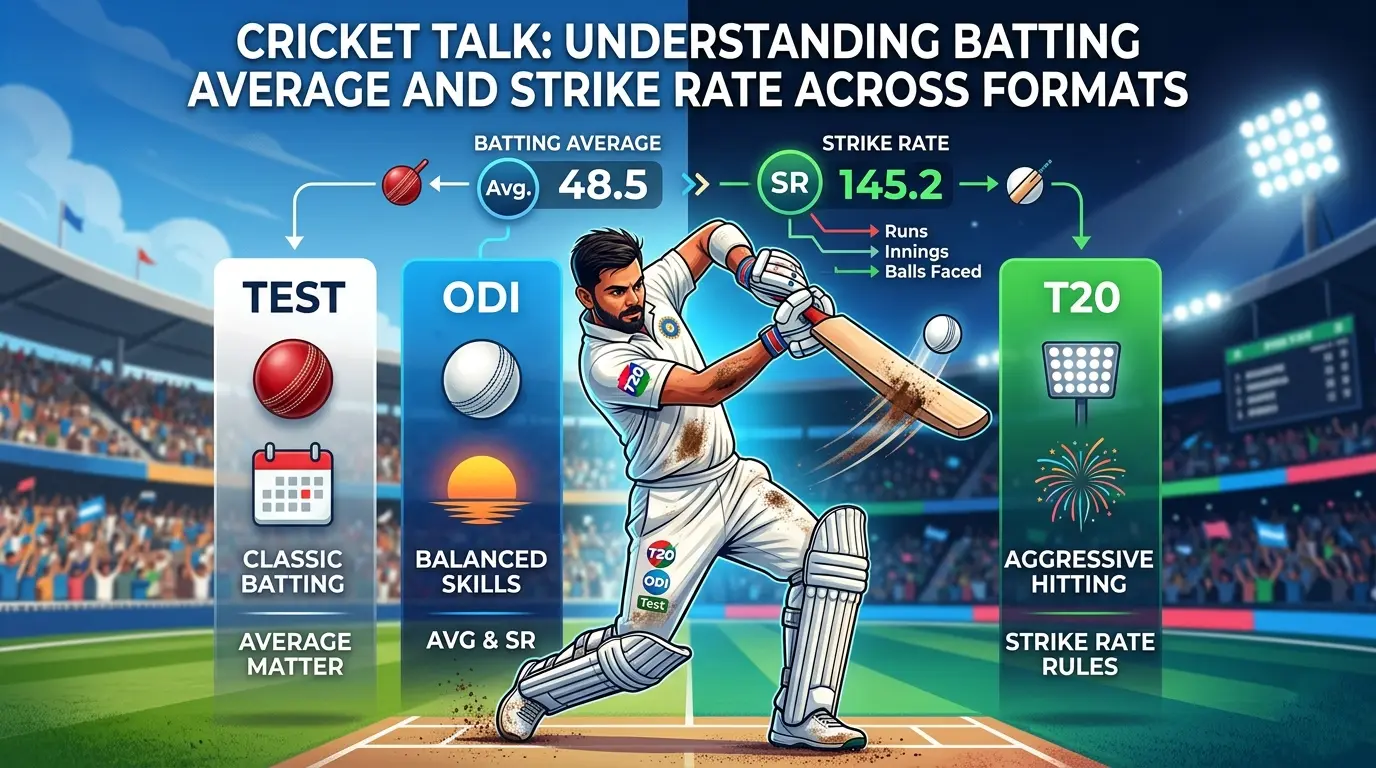
T20 cricket is fast food done brilliantly. You sit down, the action starts immediately, someone hits a six off the very first ball, and two hours later the whole thing is over. It fits into your evening, your lunch break, your commute home. You do not need to plan your entire week around it.
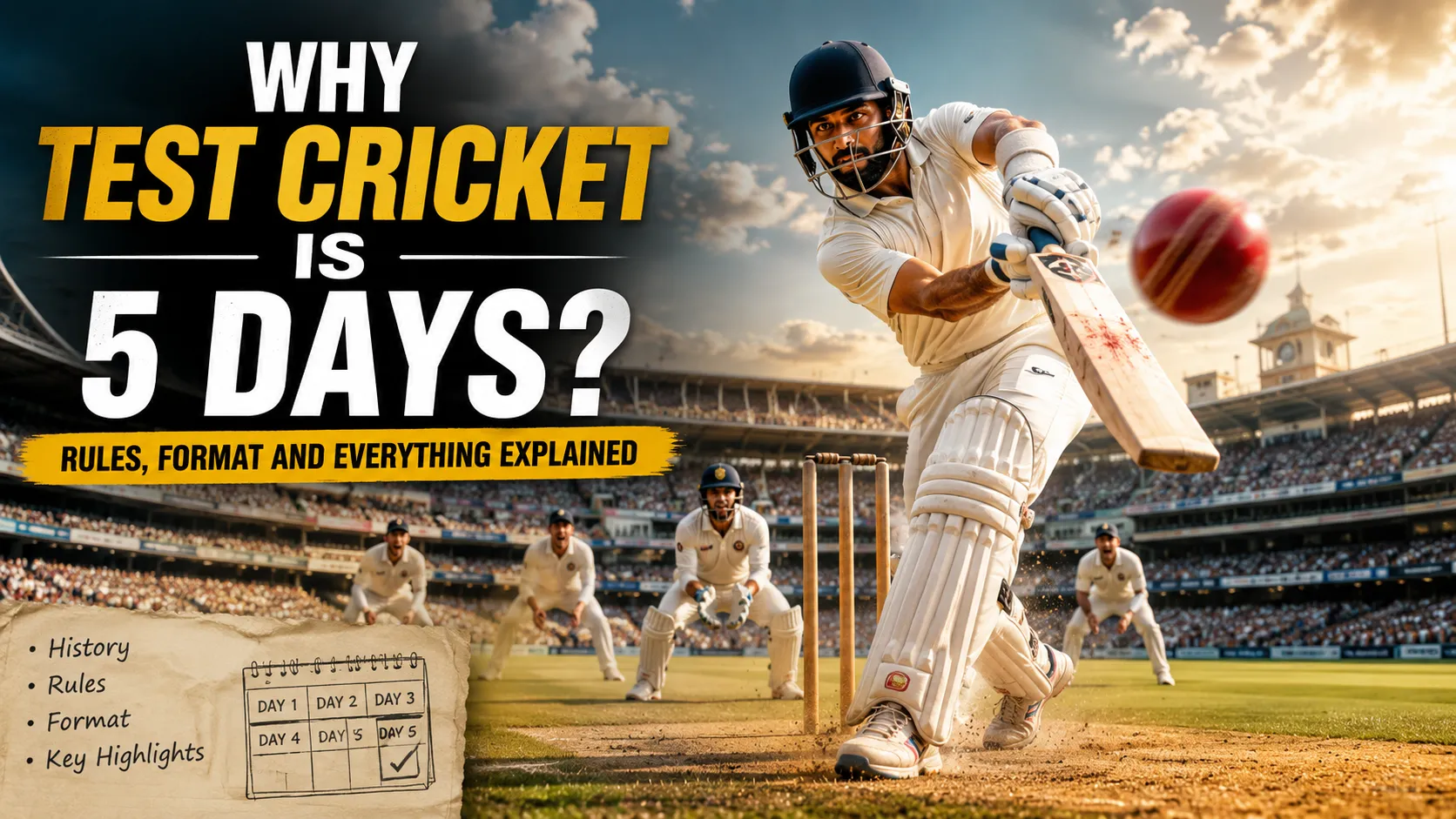
Test cricket is something else entirely. It is slow cooked, layered, and deeply rewarding if you have the patience for it. It unfolds over five days like a long novel where every chapter builds on the last. The bowler working on a batter for three sessions, waiting for the moment the technique cracks. The partnership that saves a match no one thought could be saved. The tension on the final afternoon when nine wickets are down and the last pair is somehow still standing.
Neither of these is better than the other. They are just completely different experiences, and that distinction matters a lot when we talk about the future.
Why T20 is Winning the Commercial War
The numbers are hard to argue with. T20 leagues have exploded across the world. The IPL alone generates billions in revenue, draws some of the biggest television audiences in cricket history, and has turned domestic players into international celebrities overnight. Similar leagues in Australia, the Caribbean, England, and South Africa have followed the same path.
Broadcasters love T20 because it fits neatly into a primetime slot. Advertisers love it because younger audiences watch it in massive numbers. Boards love it because it funds everything else. The money flowing through T20 cricket today dwarfs what any other format generates, and that gap is only widening.
When that much money concentrates in one place, it reshapes priorities. Players get paid more for a two month T20 league than some earn from an entire year of Test cricket. Scheduling gets distorted to accommodate league windows. Young players grow up wanting to be T20 stars rather than Test legends.
That is a real structural shift, and it would be dishonest to downplay it.
But Test Cricket is Not Going Quietly
Here is what the panic around T20 often misses. Test cricket still produces the moments that define careers and get talked about for generations.
India winning in Australia. Ben Stokes rescuing England from the dead. A spinner turning a match on a deteriorating fifth day pitch. These things do not happen in T20 cricket. They cannot. The format simply does not allow enough time for that kind of storytelling.
Players who excel in Tests carry a status in the game that T20 success alone does not bring. Ask any top cricketer privately and almost all of them will tell you that their Test record is what they care about most when they think about their legacy. There is something about performing under sustained, grinding pressure across five days that separates good players from genuinely great ones.
Fans feel it too. The audience for Tests skews older, yes, but they are deeply invested and loyal. A big Test series between India and Australia or England and New Zealand still draws serious viewership. The atmosphere inside a ground on the final day of a close Test match is unlike anything T20 can manufacture.
What the ICC is Trying to Do
The people running cricket are aware of all this. The World Test Championship was created specifically to give Test cricket a bigger story to tell. Rather than a collection of disconnected bilateral series, teams now compete over a two year cycle for a place in a final that crowns a genuine world champion. It gives context, stakes, and something to follow across the longer haul.
It is not a perfect solution. Scheduling is still messy, not all series carry equal weight in the standings, and some teams play far fewer Tests than others. But the intent is right. Test cricket needs a competition structure that casual fans can follow and invest in, and the WTC is moving in that direction.
The Real Problem for Players
The biggest pressure point right now is not fans choosing between formats. It is players being asked to play all three.
A top international cricketer today is expected to handle a home Test series, away ODIs, a T20 World Cup, and two or three franchise league seasons, all within the same calendar year. The physical and mental toll of that schedule is enormous. Injuries are increasing. Burnout is becoming a genuine issue.
Some players are starting to make hard choices. A few have stepped back from Tests entirely to extend their T20 careers and earning potential. Others have walked away from lucrative leagues to protect themselves for international cricket. There is no right answer, but the fact that players have to choose at all says something about how stretched the system has become.
What Younger Fans Actually Want
Here is a nuance that often gets lost in this debate. Younger fans who came into cricket through T20 are not necessarily closed off to Tests. Many of them follow their favorite players regardless of format. If Virat Kohli is batting in a Test match, his fans watch. If Jasprit Bumrah is bowling on a fifth day pitch, people tune in.
The entry point has changed, not the destination. T20 is bringing people into the sport who then discover other formats. That is actually a healthy thing for cricket overall, not a threat.
The challenge is making Test cricket accessible to that audience, better television production, more storytelling around the series, clearer context for what is at stake. The sport is good enough to hold newer fans attention if it is presented well.
Will T20 Replace Tests Completely?
Almost certainly not. At least not anytime soon.
Test cricket has institutional support, historical weight, and a fanbase that is fiercely protective of the format. The ICC has financial and reputational reasons to keep it alive. Major cricket nations like India, England, and Australia still see their Test teams as national priorities.
What might change is how many Tests are played and which nations can sustain them commercially. Some smaller boards already struggle to fill stadiums for Test matches. Over time, Tests might become more concentrated between the top nations, while T20 becomes the primary format for growing the sport in newer markets.
That is evolution, not extinction.
The Future Looks Like Both, Not Either
The most realistic picture of cricket ten or twenty years from now probably has T20 continuing to grow, generating the money that funds the entire ecosystem, bringing in new audiences globally, and making franchise cricket a major sporting product worldwide.
And alongside it, Test cricket holds its ground as the format where reputations are built and legends are made. Fewer series perhaps, more carefully promoted, with better context and more concentrated scheduling. But still there, still producing its particular kind of magic.
Think of it like this. You can love both a quick plate of pakoras and a slow cooked biryani. They serve different purposes. You eat them in different moods. One does not have to disappear for the other to exist.
Cricket is big enough to hold both. The question is whether the people running the sport are smart enough to manage that balance before the financial weight of T20 tips things too far in one direction.
For now, the rivalry between bat and ball, across all five days, still has plenty of life left in it.