What is LBW in Cricket? The Complete Explanation of Leg Before Wicket
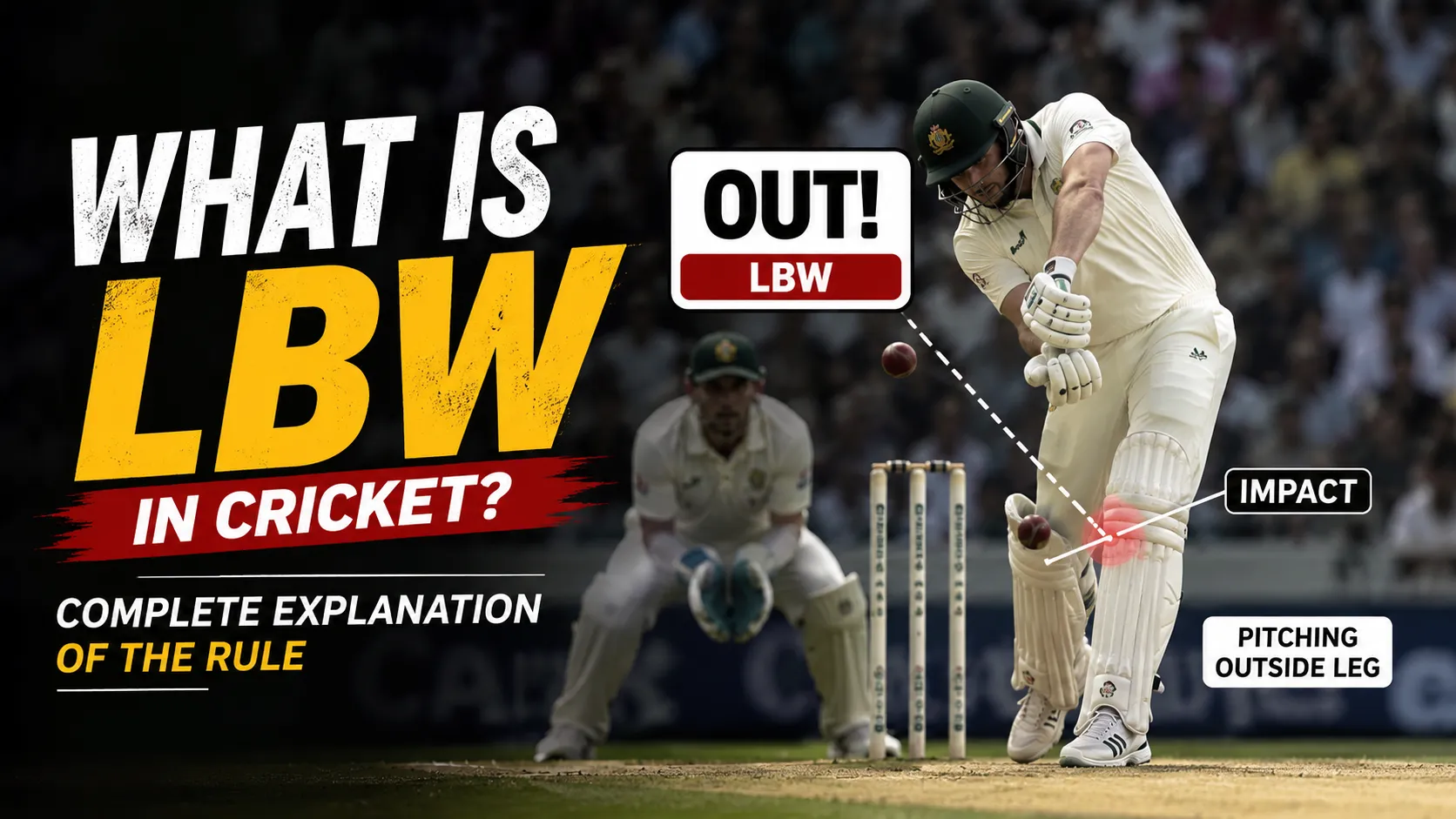
The bowler delivers. The ball strikes the batter's pad. The entire fielding side erupts in a massive appeal. The umpire pauses for a moment and then slowly raises the index finger.
LBW. Leg Before Wicket. Out.
But why? The ball hit the pad, not the stumps. Why is that a dismissal?
LBW is one of cricket's most important rules and one of its most frequently debated. Understanding it properlythe conditions that must be met, the factors the umpire weighs, and how DRS technology has changed how these decisions are madetransforms how you watch cricket at every level.
What LBW in Cricket Actually Means
The core principle of the LBW rule is straightforward. A batter cannot use their body to stop the ball from hitting the stumps. If the ball strikes the batter's leg or pad in a situation where it would otherwise have gone on to hit the stumps, the batter can be given out leg before wicket.
The rule exists because cricket is fundamentally a game where the bowler's objective is to hit the stumps. Without the LBW rule, batters could simply stand in front of their stumps and use their pad to block every delivery that threatened to hit them, with no risk of dismissal. The bat would become largely irrelevant as a defensive tool. LBW prevents this by making the pad an extension of the wicket in certain circumstancesif your pad is protecting your stumps and the ball would have hit them, you are out.
The rule was first written into cricket's Laws in 1774, introduced specifically because batters had begun using their pads to deflect balls away from the stumps without any attempt to play the ball with the bat.
The Five Conditions the Umpire Must Consider
An LBW decision is not simply about the ball hitting the pad. The umpire must work through a specific sequence of conditions, and all relevant ones must be satisfied before giving the batter out. A single condition not being met means not out regardless of everything else.
Condition 1Was it a legal delivery?
The delivery must be legal. A no ballwhether through the bowler overstepping, bowling a beamer, or any other infringementimmediately rules out any LBW dismissal. If it is a no ball, the batter is automatically not out regardless of what the ball does afterward. The umpire checks this first because it is the quickest and most definitive test.
Condition 2Did the ball hit the bat before the pad?
For an LBW dismissal to apply, the ball must make contact with the batter's bodytypically the pad or legbefore touching the bat or the hand holding the bat. If there is any contact with the bat first, even the smallest edge, the ball has been played and LBW cannot apply.
This condition is one of the most difficult for on-field umpires to assess in real time because the margin between a clean pad strike and a bat-then-pad deflection can be invisible to the naked eye. Technology in professional cricketparticularly UltraEdge, which detects the sound of the ball contacting the bat through microphones and displays it as a spike on a graphhas become the primary method for resolving this question on review.
Condition 3Where did the ball pitch?
Where the ball lands on the pitch after leaving the bowler's hand is the third condition the umpire assesses.
If the ball pitches outside the line of leg stumpthe stump closest to the batter's bodythe batter cannot be given out LBW regardless of anything else. Even if the ball then deflects dramatically into the stumps and would clearly have hit them, no LBW is possible if it pitched outside leg. This rule exists specifically to prevent bowlers from bowling negatively down the leg side, simply targeting the batter's pads with no attempt to hit the stumps.
If the ball pitches in line with the stumps or outside off stump, LBW remains possible subject to the remaining conditions being satisfied.
Condition 4Where did the ball strike the batter's body?
The point at which the ball first contacts the batter's body is the fourth consideration, and it introduces one of the most important distinctions in the LBW rule.
If the ball strikes the batter in line with the stumpsmeaning the impact point is between the two outer stumps or directly in line with any of the three stumpsand all other conditions are met, the batter can be given out.
If the ball strikes the batter outside the line of off stumpmeaning the impact is on the off side of the off stumpthere is a crucial additional requirement. The batter can only be given out if they were not offering a shot. This means if the batter made no genuine attempt to play the ball with the bat, simply allowing the ball to hit their pad with the bat not involved, they can be given out even if the impact was outside off stump. But if the batter attempted to play a shoteven if they completely missedand the ball impacted outside off stump, they are not out. This rule exists to encourage positive, attacking play rather than allowing batters to be dismissed for missing a ball they were genuinely attempting to hit.
Condition 5Would the ball have hit the stumps?
All the previous conditions can be satisfied, but the final and most fundamental question remainswould the ball actually have gone on to hit the stumps if the batter's body had not been in the way?
This is the condition that requires the most judgment when made by an on-field umpire without technology. The umpire must mentally project the ball's trajectory from the point of impact and assess whether it would have reached the stumps at a height between the ground and the top of the bails.
In professional cricket this projection is now performed by ball-tracking technologyHawk-Eye or Virtual Eye systemsthat use cameras positioned around the ground to calculate the ball's trajectory based on its actual movement before impact and project that trajectory forward. The visual representation of this projection is what audiences see on television during DRS reviews, showing the predicted path of the ball through and beyond the batter's position.
How DRS Changed LBW Decision-Making
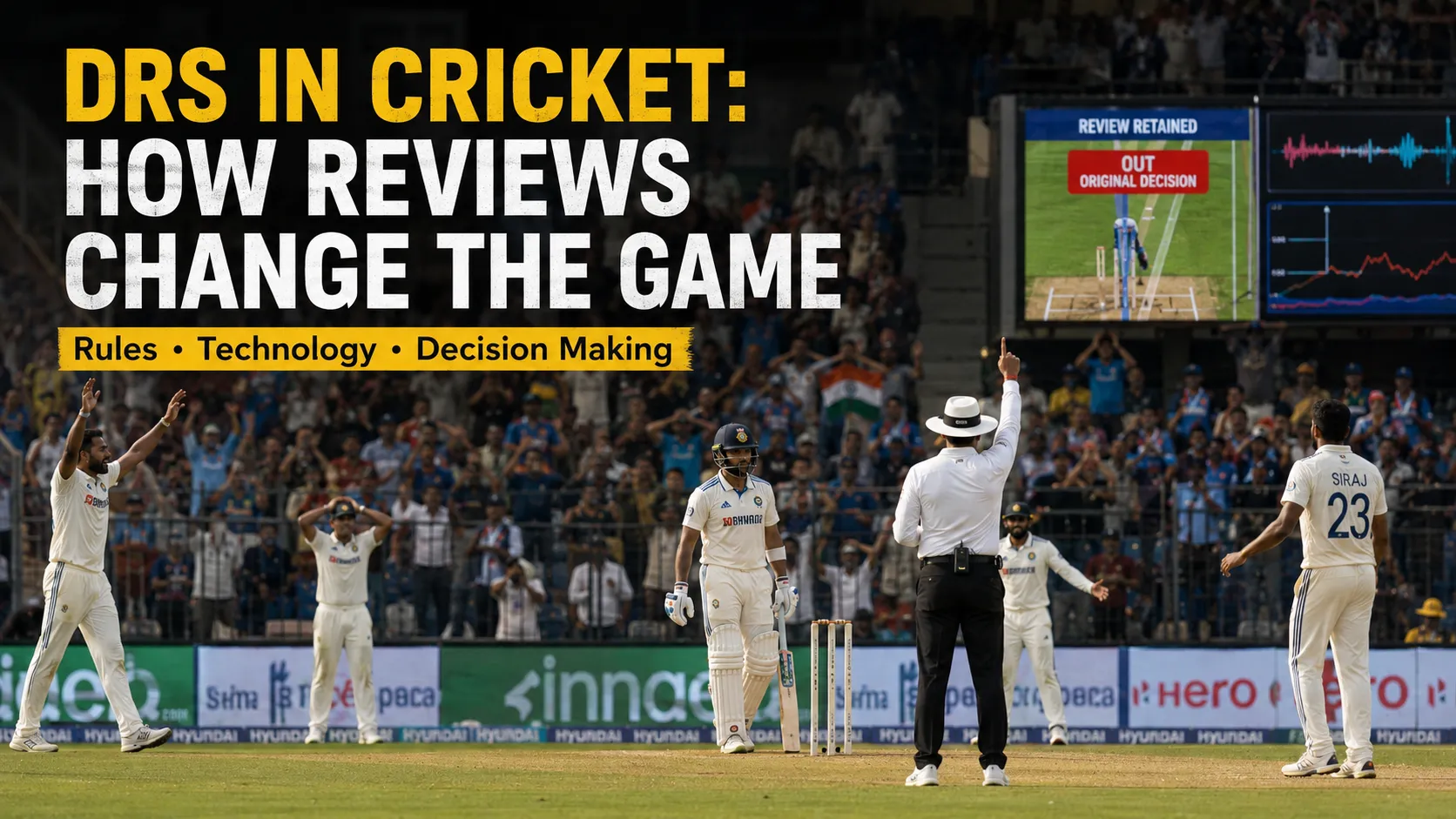
The Decision Review System introduced a formal mechanism for teams to challenge on-field umpiring decisions, and LBW dismissals are the most frequently reviewed decisions in professional cricket because they are simultaneously the most important and the most difficult for on-field umpires to assess without technological assistance.
When an LBW decision is reviewed, the third umpire works through the conditions in sequence using available technology.
First the delivery is checked for no ball, examining the bowler's front foot position against the popping crease. A confirmed no ball immediately overturns any LBW dismissal.
Next, bat contact is assessed using UltraEdge audio technology and Hot Spot infrared imaging where available. A clear spike in the UltraEdge audio at the moment the ball passes the bat, or a heat mark on Hot Spot at the bat's edge, confirms bat contact and rules out LBW.
If no bat contact is confirmed, the ball-tracking system projects the delivery's trajectory to assess where it pitched, where it impacted the batter, and whether it would have hit the stumps.
Umpire's CallThe Most Debated Aspect of DRS
The most controversial element of DRS LBW reviews is the concept of Umpire's Call. When ball-tracking shows the delivery as only marginally hitting the stumps or only marginally impacting on the line, the decision reverts to whatever the on-field umpire originally decided rather than being definitively overturned by technology.
Umpire's Call recognises that ball-tracking technology, while highly sophisticated, has a margin of uncertainty in its projectionsparticularly in the final phase of the ball's trajectory beyond the batter's body where the actual ball did not travel. When a projected outcome falls within a defined margin of uncertainty around the stumps or the line of impact, the technology acknowledges that it cannot definitively overrule the umpire's judgment.
The practical consequence is that two identical deliveriesone given out by the umpire and one given not out by the umpirecan produce different DRS review outcomes if both fall within the Umpire's Call margin. The reviewing team loses their review in both cases, but one batter is out and the other is not, despite the ball's trajectory appearing identical.
This produces the most heated debates in cricket commentary and among fans because the same delivery appears to produce different outcomes depending on what the umpire originally decided rather than on the ball's actual trajectory. The logic of the rulethat technology within a margin of uncertainty should defer to the umpire rather than override themis defensible in principle but consistently frustrating when witnessed from the outside.
Why LBW Remains the Most Debated Dismissal in Cricket
Even with ball-tracking technology eliminating many of the uncertainties that previously made LBW contentious, the dismissal remains cricket's most discussed and argued-over method of getting out.
The sheer number of variables involved means that marginal calls are inevitable and frequent. Spinners who turn the ball sharply create different trajectory challenges from fast bowlers who swing or seam the delivery. A batter who moves significantly across their crease before the ball arrives changes the relationship between their position and the stumps. The borderline between attempting a shot and merely padding the ball away is genuinely difficult to establish with certainty even with multiple camera angles.
These variables mean that across any substantial period of watching Test cricket or ODI cricket, LBW decisions that generate genuine debate among knowledgeable observers will occur regularly. The technology has reduced the frequency of clear errors but cannot eliminate the judgment element that makes LBW the rule it is.
FAQ: What is LBW in Cricket
What does LBW stand for in cricket?
LBW stands for Leg Before Wicket. It is a method of dismissal where a batter is given out for using their body to prevent the ball from hitting the stumps in circumstances where the ball would have done so if the body had not been in the way.
What are the conditions for LBW in cricket?
For an LBW dismissal the delivery must be legal, the ball must hit the body before the bat, the ball must not have pitched outside leg stump, and the ball must have been projected to hit the stumps. If the impact was outside off stump the batter must also have been not offering a shot.
Can you be out LBW if the ball pitches outside leg stump?
No. If the ball pitches outside the line of leg stump the batter cannot be given out LBW regardless of any other circumstances. This rule prevents bowlers from bowling negatively down the leg side targeting the pads.
What is Umpire's Call in cricket DRS?
Umpire's Call applies in DRS reviews when ball-tracking shows a delivery only marginally hitting the stumps or marginally impacting on the line. In these marginal situations the decision reverts to the original on-field umpire's judgment rather than being overturned by technology.
Can you be out LBW if you play a shot and miss?
If the impact is in line with the stumps you can be given out LBW even if you attempted a shot and missed. However if the impact is outside the line of off stump you cannot be given out LBW if you were offering a genuine shoteven if you completely missed the ball.
How does DRS technology check LBW decisions?
DRS checks LBW decisions by first verifying the delivery is legal, then using UltraEdge and Hot Spot to check for bat contact, and finally using ball-tracking projection systems like Hawk-Eye to determine where the ball pitched, where it impacted the batter, and whether it would have hit the stumps.