What is DRS in cricket?
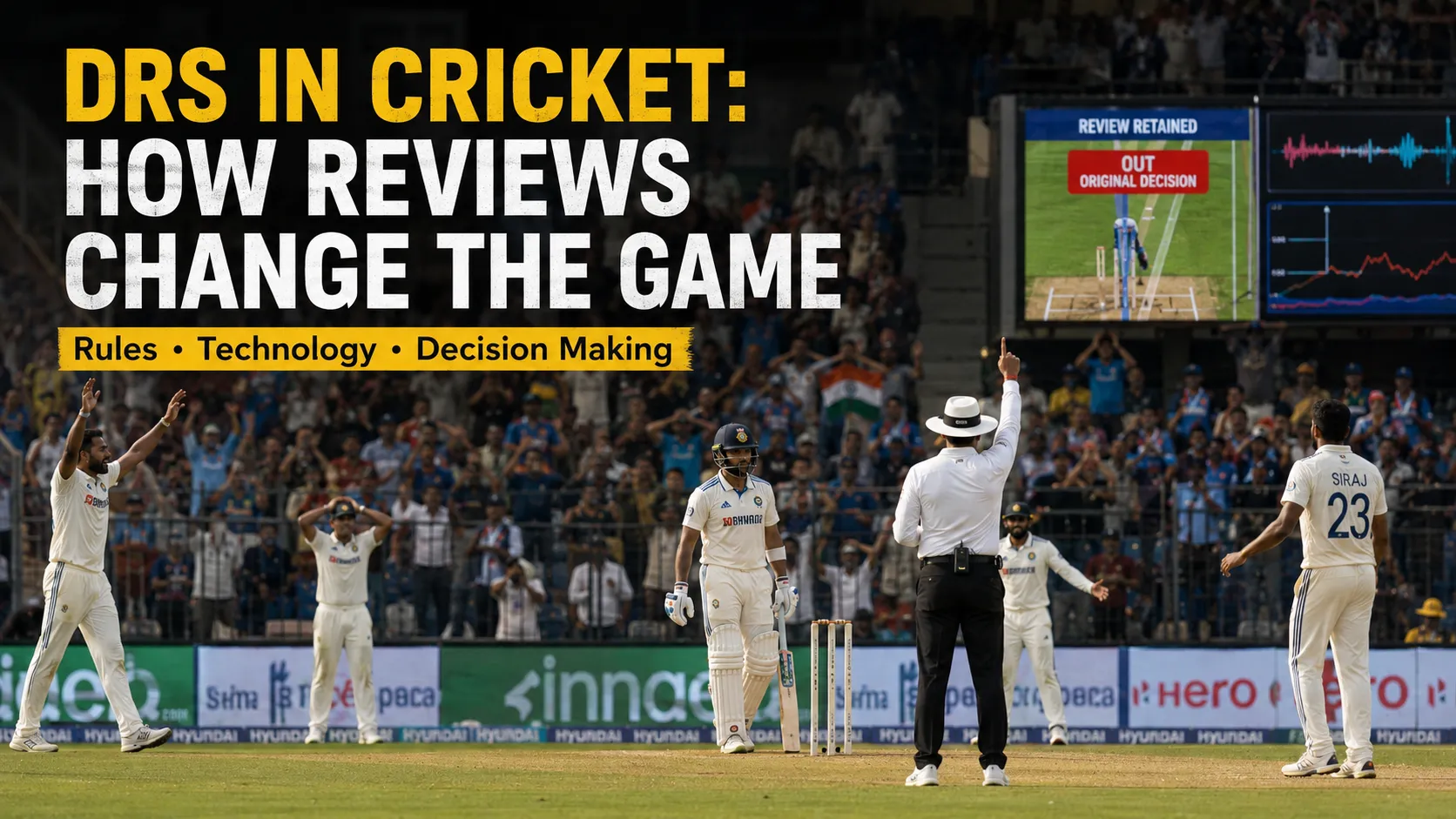
DRS stands for Decision Review System, the process that lets a batter or a fielding captain challenge an on-field umpire's decision using technology. The player has 15 seconds to ask for a review, done by making a T shape with their arms, after which the third umpire looks at ball-tracking data, edge-detection audio, and video replays before confirming or reversing the call. Each team gets two unsuccessful reviews per innings in Test cricket and one in ODIs and T20Is, and a successful review doesn't count against that total. DRS comes up most often on lbw appeals, thin edges behind the wicket, and close run-outs or stumpings.
Why DRS exists
Before DRS, an umpire's decision was final, and a wrong call on a big lbw shout or a thin edge could decide a match with no way to fix it. The system was trialled for the first time in a Test between India and Sri Lanka in 2008, largely as a response to a string of high-profile umpiring errors that television replays had already exposed to everyone watching at home. The idea was never to remove the umpire from the game; it was to give the on-field official a second look at anything technology could genuinely clarify.
How a review actually works
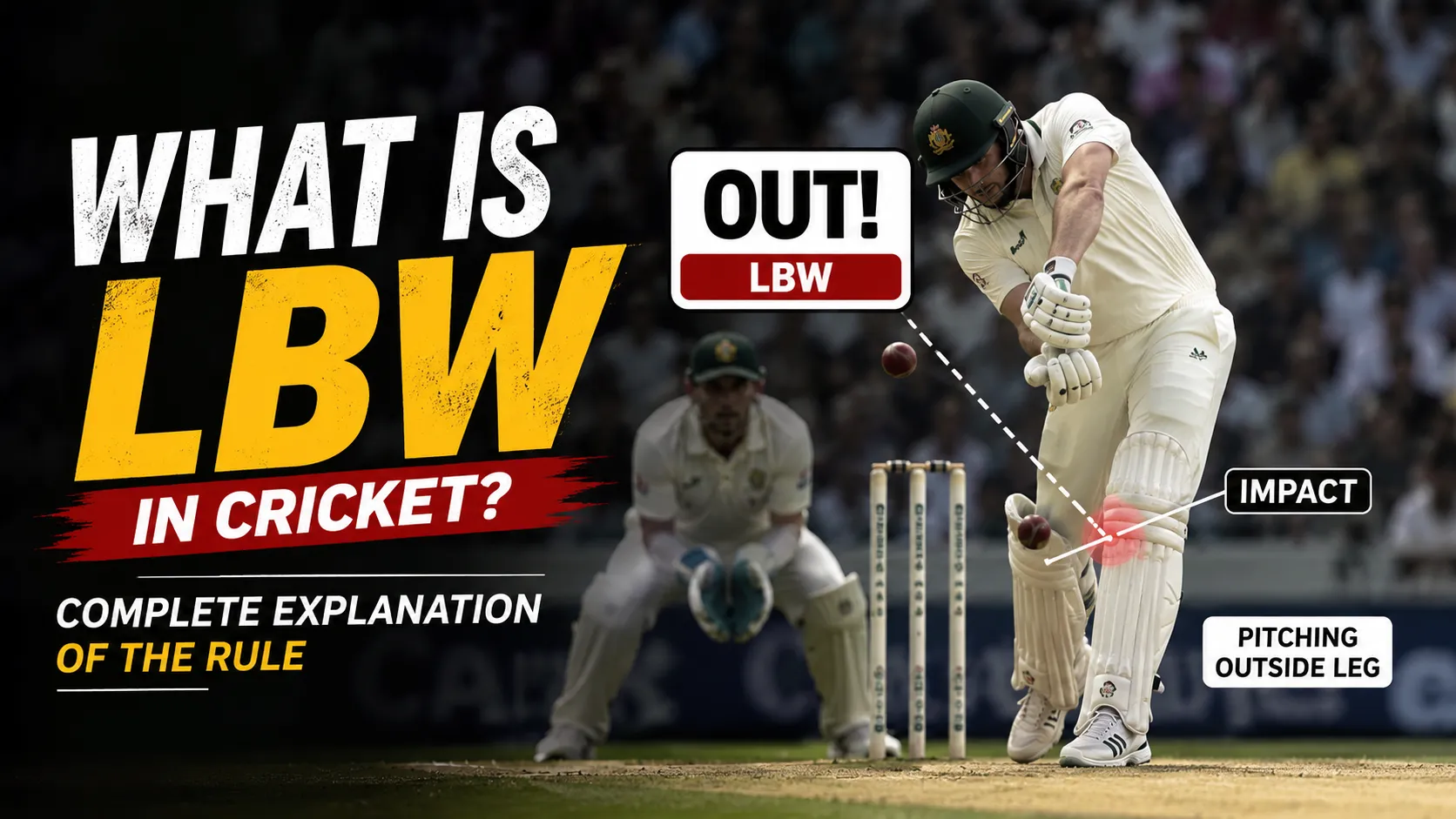
If a batter is given out and disagrees, they can ask their partner or simply signal for a review themselves. If the fielding side wants to challenge a not-out decision, the call has to come from the captain, and only the captain — a bowler or fielder shouting for it counts for nothing on its own. Once the review is signalled, the on-field umpire refers it to the third umpire, who has access to Hawk-Eye ball-tracking, UltraEdge (sometimes called Snicko), and multiple camera angles. For an lbw shout, ball-tracking projects the ball's path to see whether it would have gone on to hit the stumps. For a caught-behind appeal, UltraEdge checks for a spike in the sound recorded as the ball passes the bat. The third umpire relays the finding back, and the on-field umpire either sticks with the original call or overturns it.
How many reviews does each team get
Test teams get two unsuccessful reviews per innings. ODI and T20I teams get one. The word "unsuccessful" matters here — if a review overturns the original decision, the team keeps that review and can use it again later in the same innings. Only reviews that fail to change the outcome are deducted from the count.
What is umpire's call
Umpire's call applies specifically to lbw reviews. Ball-tracking can predict where a delivery would have ended up, but the further the ball travels after hitting the pad, the less certain that prediction becomes. So if the projection shows the ball just clipping the edge of the stumps rather than hitting them squarely, the system treats it as too close to overrule the umpire, and the original on-field decision stands. Crucially, a team doesn't lose a review when the result comes back as umpire's call — the review is simply void.
What technology DRS actually uses
Hawk-Eye handles the ball-tracking side, built from multiple synchronised cameras that reconstruct a delivery's path in three dimensions. UltraEdge picks up the faint sound of bat on ball using a stump microphone, timed against the frame in which the ball passes the bat. Hot Spot, a thermal-imaging system that showed a bright mark wherever the ball made contact, was widely used in the system's early years but has largely fallen out of use in international cricket because of its cost and inconsistent results in humid conditions.
Why DRS still causes arguments
Marginal lbw calls and thin edges are, by nature, close enough to argue about even with technology involved, and commentators and players still disagree with umpire's call decisions on a fairly regular basis. Sachin Tendulkar's lbw reprieve against Pakistan in the 2011 World Cup semi-final is one of the most replayed examples of how much a single review can shape a match. None of this means the system doesn't work — it means DRS was built to reduce clear errors, not to remove every point of disagreement from the game.
Frequently asked questions
How many DRS reviews does a team get in a Test match? Two unsuccessful reviews per innings. A successful review doesn't count against this total.
How many DRS reviews are allowed in ODIs and T20Is? One unsuccessful review per team per innings.
What happens when the result is umpire's call? The on-field decision stands, but the team does not lose the review — it's treated as void rather than unsuccessful.
Who can ask for a DRS review? Only the batter who has been given out, or the fielding captain challenging a not-out decision. Nobody else can request one.