DLS Method in Cricket Explained: How Rain Changes the Target Score
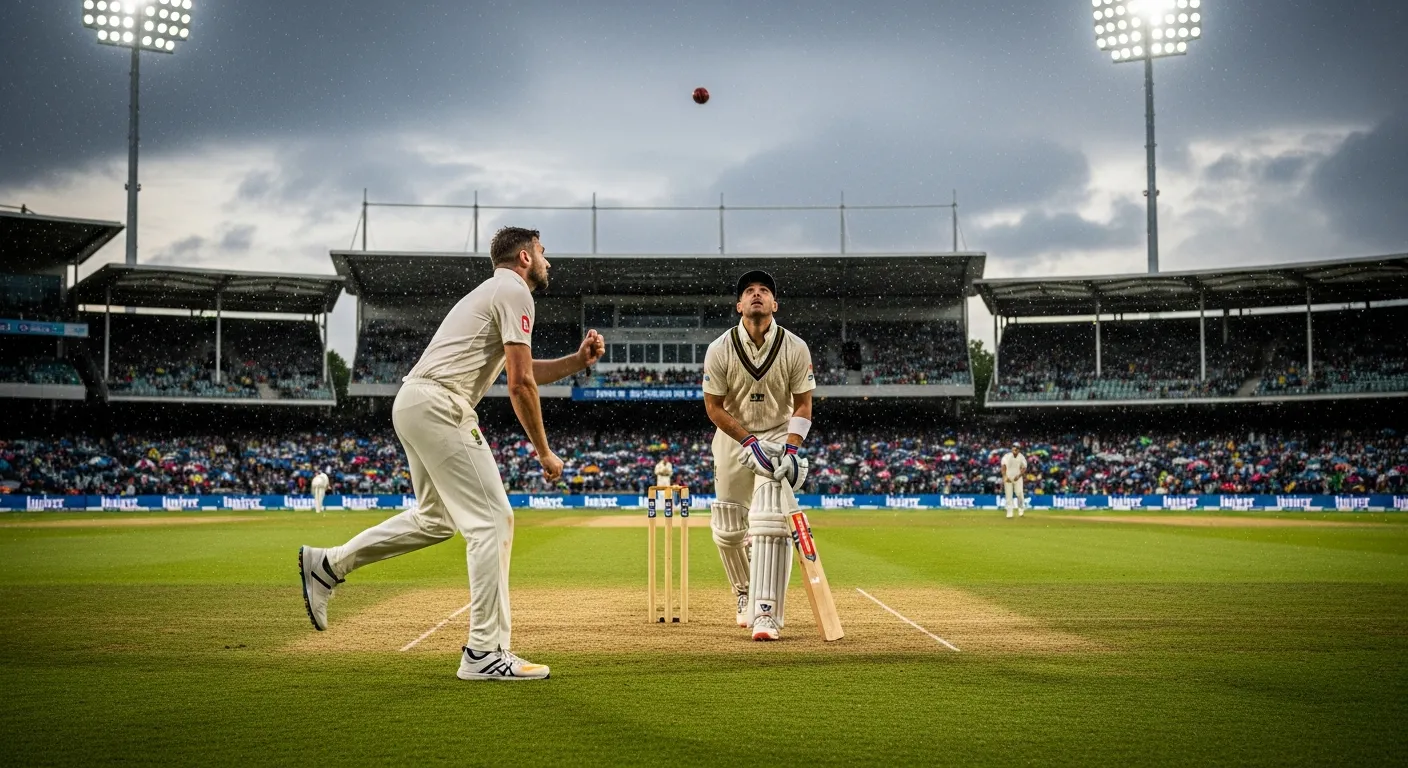
One moment a team needs 89 runs from 12 overs with 6 wickets in hand. Rain arrives. Play stops for 40 minutes. When the covers come off the target has changed completely — and half the ground has no idea why.
The DLS method in cricket is the mathematical system that recalculates target scores when rain or other interruptions reduce the overs available in a limited overs match. It is used in every ODI and T20 international around the world and has been part of cricket since 1999. Understanding how it works does not require a mathematics degree — it requires understanding one central idea that makes everything else logical.
Why Cricket Needed the DLS Method
Before the DLS method existed cricket used simpler approaches to handle rain interruptions that consistently produced unfair results.
The most famous example came in the 1992 Cricket World Cup semi-final between England and South Africa. South Africa needed 22 runs from 13 balls when rain arrived. The method being used at the time — called the Most Productive Overs method — calculated a revised target based on which overs had been most productive in England's innings. When play resumed South Africa needed 21 runs from a single delivery. An impossible target from a system that was supposed to produce fairness.
That moment demonstrated clearly that cricket needed something more sophisticated. Two English statisticians, Frank Duckworth and Tony Lewis, developed a new mathematical approach through the mid-1990s. The ICC adopted their method officially in 1999 and it immediately produced more consistent and defensible results than anything that had come before.
Steven Stern, another statistician, later refined the formula to account for the higher scoring rates of modern cricket — particularly the T20 era where batting approaches have changed significantly. The updated version became the Duckworth-Lewis-Stern method, giving it the DLS name it carries today.
The Central Idea: Resources
The DLS method in cricket is built around one concept — resources. Everything else follows from understanding what resources means in this context.
When a batting team begins their innings in a limited overs match they have two resources available to them. First, the overs they have to bat — in an ODI that is 50 overs, in a T20 that is 20 overs. Second, the wickets they have in hand — always starting at 10.
These two resources together determine how many runs a team can score. A team with all 10 wickets and 50 overs can play conservatively early and accelerate later. A team with 3 wickets and 10 overs must take immediate risks because their resources are severely limited. The DLS method assigns a percentage value to every possible combination of overs remaining and wickets in hand — representing what proportion of a team's total scoring potential remains at that exact moment.
A team that begins their innings with 10 wickets and 50 overs has 100 percent of their resources. A team with 5 wickets and 20 overs might have 50 percent of their resources depending on the exact values in the DLS tables. These percentages are pre-calculated and stored in the official DLS software that match officials use during interrupted matches.
The critical insight the DLS method recognises — and which earlier methods missed — is that wickets are not equally valuable at all stages of an innings. Losing your fifth wicket with 30 overs remaining is far more damaging to your scoring potential than losing your first wicket with 45 overs remaining. The DLS tables capture this asymmetry precisely, which is why the method produces fairer results than simple proportional calculations.
How the DLS Cricket Calculation Actually Works
The DLS method cricket calculation follows a consistent process regardless of when the interruption occurs or which team is affected.
The fundamental comparison the method makes is between the resources available to the team batting first and the resources available to the team batting second. If rain reduces the second team's available resources below what the first team had, the target is adjusted downward proportionally. If both teams end up with equal resources despite the interruption the target remains unchanged.
Consider a straightforward example. Team A bats first in an ODI and scores 280 runs using their full 50 overs — 100 percent of their available resources. Team B begins their chase but rain arrives after 25 overs with them having lost 3 wickets. When play resumes officials announce the match will be reduced to 40 total overs, meaning Team B has 15 overs remaining with 7 wickets in hand.
The DLS software calculates what percentage of total resources Team B now has available for their innings — let us say that combination of 15 overs and 7 wickets represents 60 percent of total resources. Team A used 100 percent of their resources to score 280. Team B now has only 60 percent of resources available. Their revised target becomes 60 percent of 280, which is 168 runs — a meaningful reduction from 280 that reflects their genuinely reduced opportunity to score.
The actual DLS tables contain values for every single over and wicket combination, making calculations precise rather than approximate. Match officials do not calculate these manually — the official DLS software produces revised targets instantly when the relevant information is entered.
What Is the Par Score in DLS Cricket
The par score is the concept that makes DLS cricket practically useful during an interrupted match rather than only after it ends.
The par score represents the number of runs the team batting second needs to have scored at any specific moment in their innings — given the overs bowled and wickets lost at that moment — to be exactly level with the team batting first according to DLS calculations.
If rain arrives and the match cannot be completed, the team batting second's actual score is compared to the par score at the moment play stopped. If their score is above par they win because they were ahead of where they needed to be when the match ended. If their score is below par they lose because they had not yet matched the resources-adjusted target.
The par score also serves as a live tactical guide during an innings. Commentators and broadcasters display the par score throughout a DLS-affected chase, allowing viewers, players, and captains to understand in real time whether the batting team is ahead of or behind the adjusted target. A batting captain who knows their team is five runs below par with six overs remaining and three wickets in hand has a precise tactical picture of what is required — far more useful than simply knowing an end-of-innings target.
When the DLS Method in Cricket Is Applied
The DLS method in cricket applies in three distinct scenarios, each requiring slightly different calculations.
The most common scenario is rain interrupting the first innings before it is completed, reducing the total overs available to the team batting first. In this case the DLS method adjusts what a competitive first innings score looks like, and then sets a second innings target that reflects the reduced resources both teams will have worked with.
The second scenario is rain interrupting the second innings after the team batting second has already begun their chase. The DLS method calculates the revised target based on the resources remaining when play resumes, which may be different from the resources the team had when the interruption began if wickets had already been lost.
The third and most complex scenario involves multiple interruptions — rain stopping play several times across an innings or across both innings. Each interruption triggers a fresh DLS calculation that accounts for the cumulative effect of all reductions on both teams' resource availability. The software handles this complexity automatically, but understanding the principle — that each reduction is assessed relative to the running resource balance between both teams — explains why revised targets can move in unexpected directions after multiple interruptions.
Why the DLS Method Sometimes Feels Unfair
Despite producing genuinely fairer results than any alternative method, the DLS cricket system generates controversy regularly. Understanding why helps you evaluate those debates more clearly when they arise.
The most common criticism is that the DLS method can produce targets that feel disproportionately difficult or easy relative to the conditions of the specific match. If a team batting first benefits from an exceptionally good batting pitch and scores 320, then rain reduces the second team's overs significantly, the DLS target may still require scoring at a rate that the conditions make extremely difficult — because the method does not account for pitch conditions, only for runs scored and resources used.
The method also assumes that run-scoring opportunities are evenly distributed across an innings, which is not entirely accurate in modern cricket where powerplay and death over scoring rates differ dramatically from middle over rates. While Steven Stern's updates improved the method's calibration for modern scoring patterns the T20 era's increasing departure from historical scoring distributions creates ongoing calibration challenges.
These limitations do not invalidate the DLS method — they contextualise it. Every alternative approach has more serious flaws. The DLS method produces the most consistently defensible results available given the inherent difficulty of comparing performances across different conditions and different amounts of cricket played. It is the best solution to an genuinely difficult problem, not a perfect one.
DLS Method in T20 Cricket
The DLS cricket method applies in T20 internationals and major T20 tournaments including the IPL and ICC T20 World Cup. The same resource percentage tables are used but calibrated for the different baseline scoring rates and tactical patterns of the 20-over format.
T20 cricket presents specific challenges for DLS calculations because the powerplay and death overs produce dramatically different scoring rates from the middle overs, and because T20 batting approaches involve more consistent aggression from ball one than the ODI approach of building through an innings. The DLS tables used for T20 reflect these differences in the resource percentages assigned to different overs and wicket combinations.
Rain interruptions in T20 matches feel more immediately dramatic than in ODIs because every over represents five percent of the total innings. A single over's reduction in a T20 chase triggers a meaningful DLS revision in a way that one over's reduction in an ODI chase barely registers. This makes DLS calculations more visible and more frequently contested in T20 cricket than in the longer format.
FAQ: DLS Method in Cricket
What is the DLS method in cricket? The DLS method in cricket is a mathematical system used to calculate revised target scores in limited overs matches interrupted by rain or other factors. It stands for Duckworth-Lewis-Stern, named after the three statisticians who developed and refined it. The ICC has used it officially since 1999.
How does the DLS method work in cricket? The DLS method works by calculating the percentage of scoring resources — overs remaining and wickets in hand — available to each team. If rain reduces the second team's resources below what the first team used, the target is adjusted proportionally to reflect the difference in available resources.
What does DLS stand for in cricket? DLS stands for Duckworth-Lewis-Stern. Frank Duckworth and Tony Lewis developed the original method in the 1990s. Steven Stern later refined the formula to better reflect modern scoring rates, particularly in T20 cricket.
What is a par score in DLS cricket? The par score is the number of runs the team batting second needs to have scored at a specific point in their innings — based on overs bowled and wickets lost — to be level with the team batting first according to DLS calculations. If rain ends a match prematurely, the team batting second wins if their score is above par and loses if it is below par.
Why is the DLS method sometimes controversial? The DLS method is sometimes controversial because it does not account for pitch conditions, weather conditions, or the specific scoring patterns of individual matches. It uses statistical averages to represent resource values, which can produce targets that feel disproportionate in matches where conditions differ significantly from historical norms.
Is the DLS method used in T20 cricket? Yes. The DLS method is used in all major T20 formats including T20 internationals, the ICC T20 World Cup, and domestic T20 competitions. The resource percentage tables are calibrated for T20 scoring patterns rather than using the same values as ODI calculations.